
Endodontics (Root Canals) in Hamilton
Gentle root canal therapy to save infected teeth and relieve severe tooth pain.
Endodontics treats infection or inflammation inside a tooth's pulp. A root canal removes the damaged tissue, seals the canal, and saves the natural tooth, usually with no more discomfort than a routine filling.
- Root Canal Therapy
- Endodontic Retreatment
- Pulp Capping
- Emergency Tooth Pain Relief
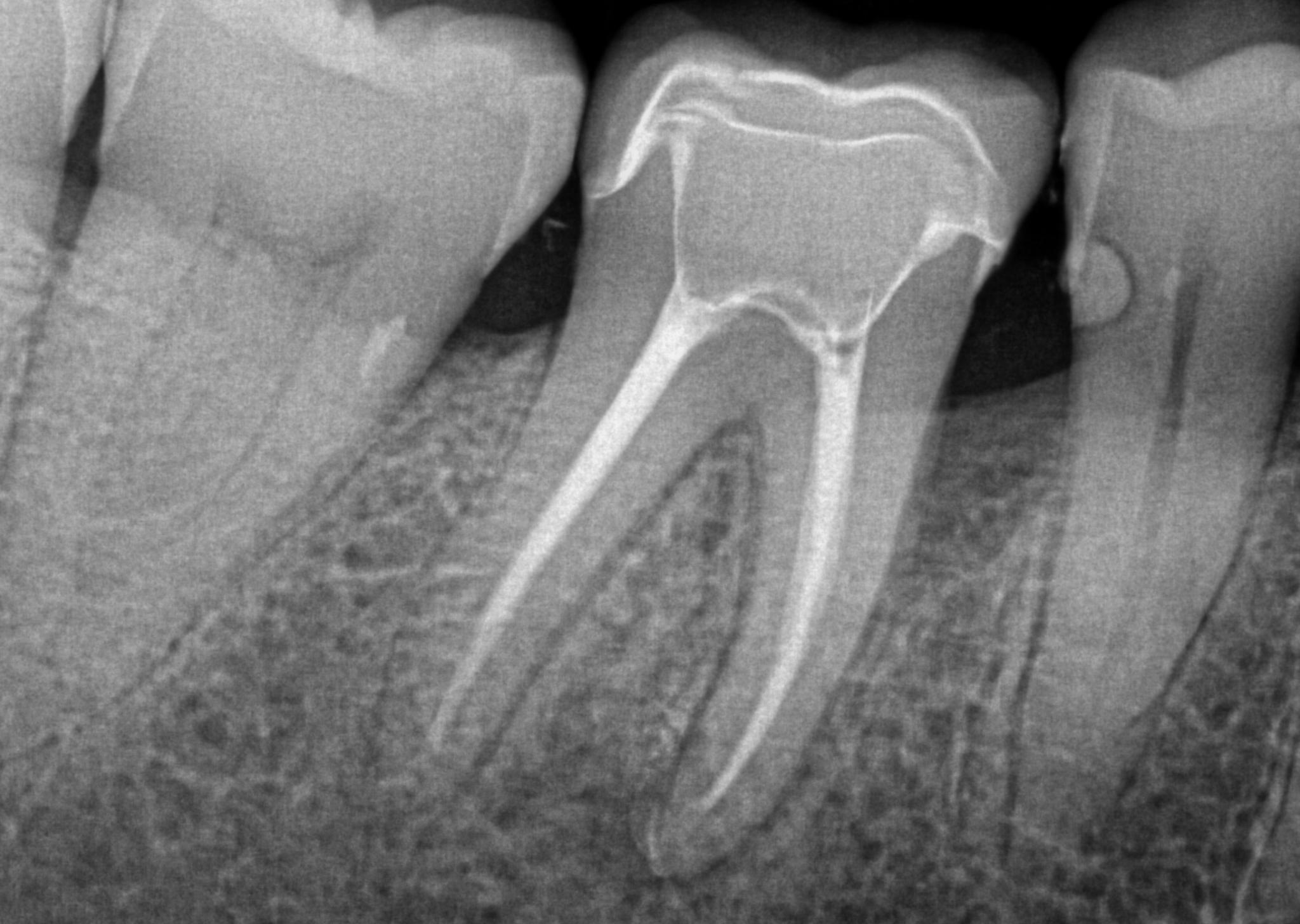
How a root canal saves an infected tooth
Root canal therapy is performed when the nerve of a tooth becomes infected from deep decay, cracks, or trauma. Our team uses modern rotary instruments, magnification, and local anesthetic to clean and seal the canal in one to two visits.
Who could qualify for endodontic treatment
- Severe, lingering toothache
- Tooth sensitivity to heat or cold that does not go away
- Swelling, pus, or pimple-like bumps on the gum
- Deep cracks or large fractures with pulp exposure
What to expect
- Diagnosis. We confirm the tooth needs treatment with an exam and X-ray.
- Anesthetic & access. The area is fully numbed; a small opening is made in the tooth.
- Cleaning & shaping. The infected pulp is removed and the canals are cleaned and disinfected.
- Seal & restore. The canal is sealed and the tooth is typically protected with a crown.
What a modern root canal actually involves
The image most people carry of root canals is from the 1970s. The reality in 2026 is unrecognizable. We anaesthetize the tooth (often with a slightly higher dose because infected nerves are harder to numb), place a rubber dam to keep the field clean, and use rotary nickel-titanium files driven by a small motor to clean and shape the canals. An apex locator tells us exactly where the root tip is. We irrigate with sodium hypochlorite and EDTA to dissolve organic debris and break up the bacterial biofilm, then fill the canal three-dimensionally with gutta percha and a bioceramic sealer.
For most patients the experience is roughly equivalent to a deep filling. The pain is usually before the appointment, not during it. Many leave saying it was easier than they had expected.
Why we work hard to save the tooth
An extraction followed by a dental implant is almost always more involved than a root canal plus a crown. Beyond that, your own tooth has a periodontal ligament that lets you feel pressure and temperature in ways an implant never quite does. We default to saving the natural tooth whenever the prognosis is good. We only recommend extraction when the tooth is unrestorable, has a vertical root fracture, or has a poor periodontal prognosis.
Single-visit versus multi-visit treatment
For straightforward cases on front teeth we often finish in a single 60- to 90-minute visit. For molars, infected teeth with abscesses, or canals that are calcified or curved, we usually do the cleaning and shaping at one visit, place a medicated dressing for one to two weeks, then return to finish. The slower path lets the inflammation settle and lowers the chance of post-op flare-ups. Either approach has good long-term success rates in the literature. We tell you which one we are recommending and why at the diagnostic visit.
Equipment and imaging we use
Every operatory has digital X-ray sensors, an apex locator, and magnification (loupes for the routine cases, microscope-level magnification when we need it for calcified or curved canals). For complex cases or retreatment we add a 3D cone-beam CT scan so we can see the root anatomy in three dimensions before opening the tooth. Most failed root canals around the world are not because of bad technique on the original treatment, they are because of an extra canal that was missed. CBCT catches that before the second attempt.
What to expect after the appointment
Most patients feel a dull soreness for two to four days as the ligament around the tooth settles. Ibuprofen 400 mg every six hours works well. The infection that was causing your pain is gone within hours of the appointment, even though the tissue around the tooth takes a few days to calm down. If pain worsens after the third day, swelling appears, or the tooth feels significantly higher than the others when you bite, call us.
Back teeth almost always need a crown within a few weeks of the root canal to prevent fracture. Front teeth sometimes do not. We will tell you which category your tooth is in.
Frequently Asked Questions
Does a root canal hurt?
Modern root canal aren't painful, most patients feel relief because the infection causing the pain is being treated.
Can I avoid extraction?
Yes. A root canal saves your natural tooth, which is almost always preferable to extraction.
Will I need a crown after?
Back teeth almost always need a crown afterwards to prevent fracture. Front teeth sometimes don't.
How many visits will it take?
Most root canal are completed in one or two visits.