
Preventative Dentistry & Dental Hygiene in Hamilton
Exams, professional cleanings, hygiene, sealants, fluoride, and X-rays that stop dental problems before they start.
Preventive care begins with an assessment of your current oral health, then a cleaning and prevention plan built around exactly what we find. Catching small problems early, before they turn into big, painful, and expensive ones, is the most effective and most affordable kind of dentistry there is.
- Dental Hygiene & Cleanings
- Oral Health & Hygiene Maintenance
- Dental Exams & Checkups
- Digital X-Rays
- Fluoride Treatments
- Pit & Fissure Sealants
- Diet Counselling
- Periodontal Charting
- Oral Cancer Screening
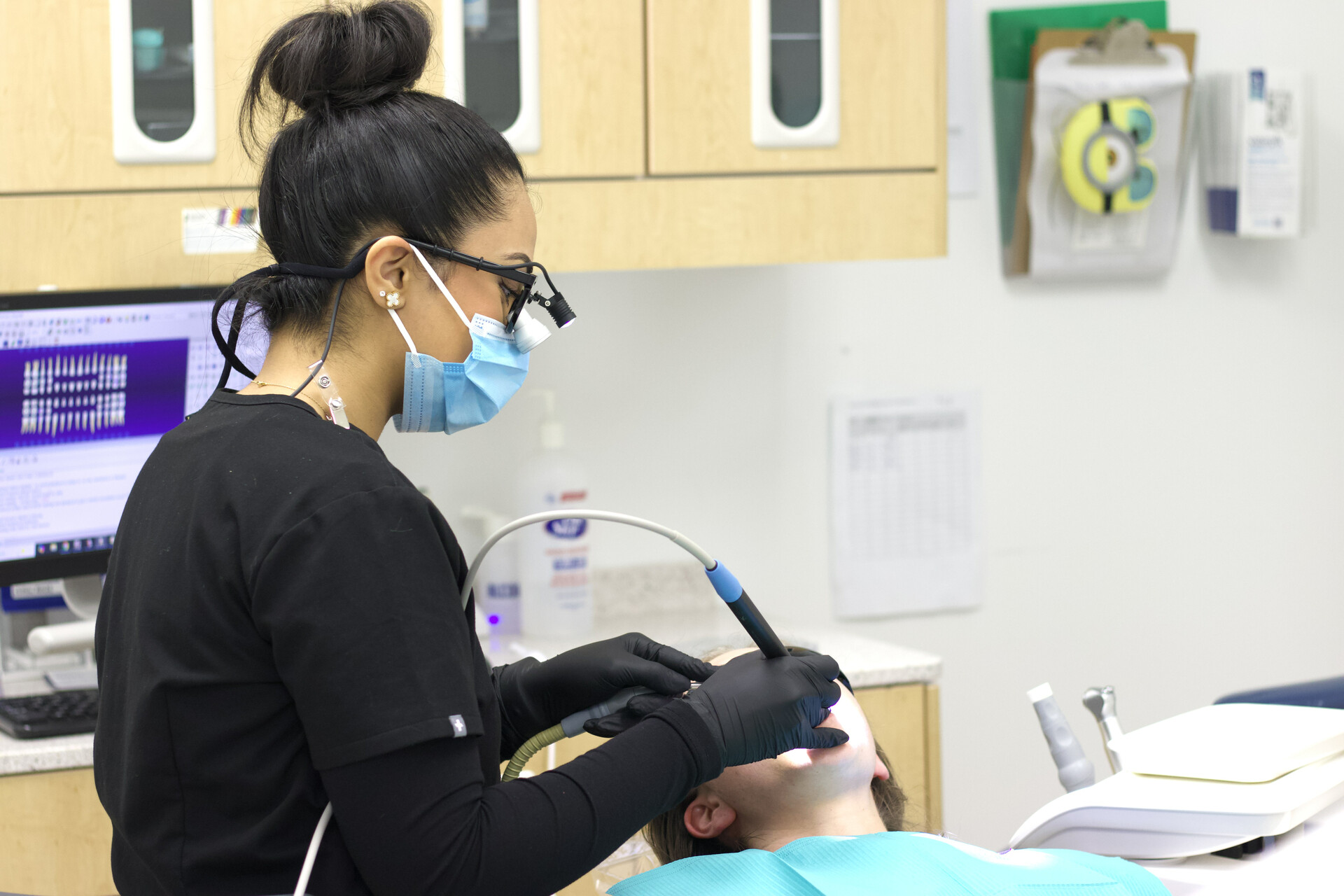
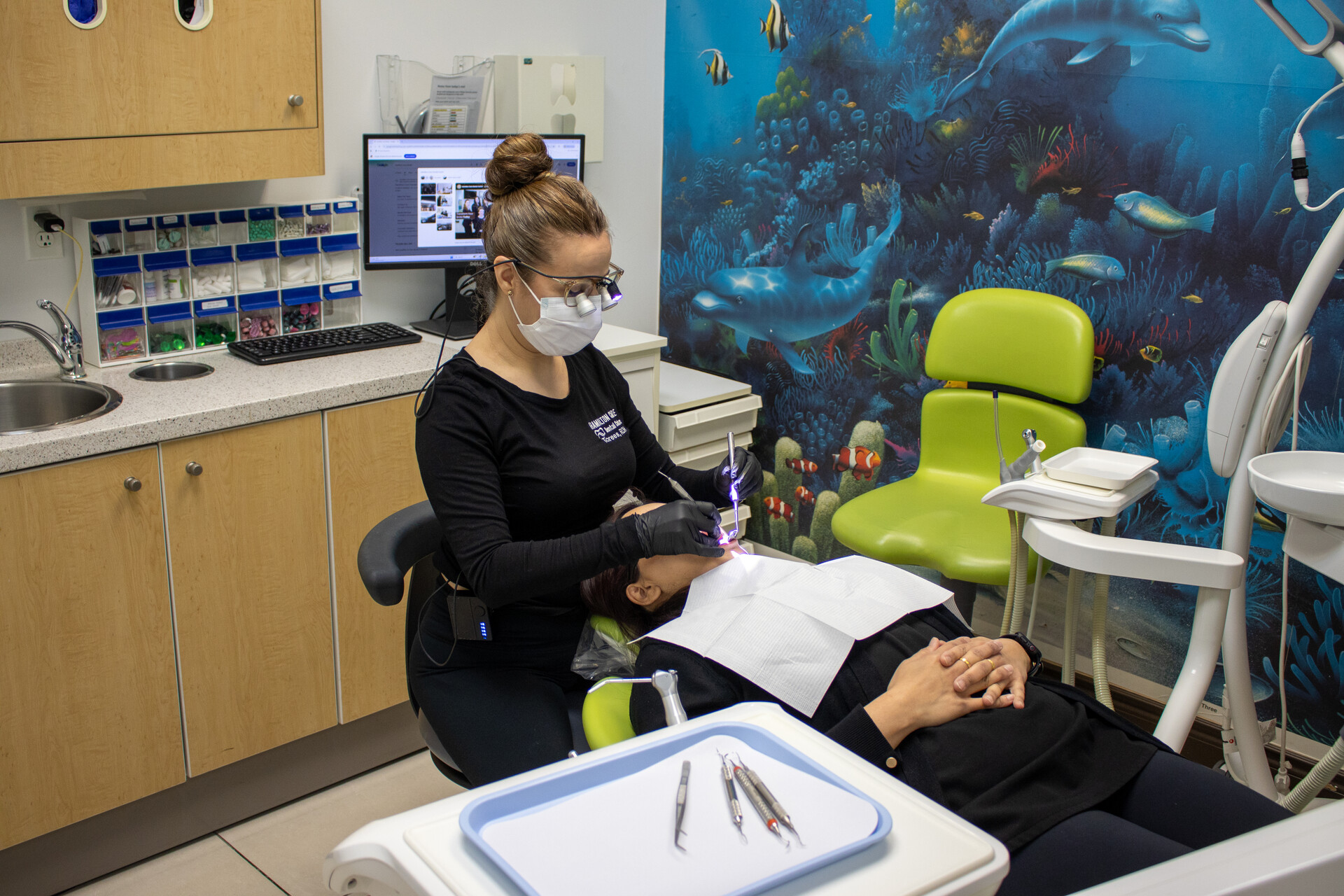
What is Preventative Dentistry?
Preventative dentistry is tailored to each patient, based on what we find when we assess your current oral health. A visit typically includes a thorough scaling of the teeth, both above and below the gumline, and polishing to remove surface stains. We then carry out a dental exam to check for any oral disease present in the mouth, so anything small that can be prevented is identified early in your assessment. Digital dental X-rays let us see the areas the eye cannot reach, and fluoride treatments help prevent new cavities and remineralize the ones that are still in their earliest stages. Your assessment also includes periodontal (gum) charting, an oral cancer screening, and an oral hygiene assessment, and we talk through personalized home care with you throughout the appointment. Most patients come in every six months; some benefit from three- to four-month visits depending on their oral health.
Who preventative dentistry & dental hygiene is good for
- Every patient, every age
- Patients with bleeding gums or persistent bad breath
- Patients with no pain at all — pain is not a sign of healthy teeth, and by the time something hurts it is usually past the preventive stage, so do not wait for pain to see the dentist
- Patients with early gum disease (gingivitis) or established periodontal concerns
- Patients with compromised or chronic systemic health — keeping up good oral hygiene and oral health helps support better overall health
- Patients with crowns, bridges, implants, or aligners that need closer monitoring
- Anyone who wants to keep their natural teeth for life
What to expect
- Health review. Your hygienist reviews your medical history and oral-care habits.
- Thorough exam. Your dentist checks your teeth, gums, bite, joints, and soft tissues.
- X-rays as needed. Modern digital X-rays use very low radiation and reveal hidden issues.
- Hygiene and cleaning. Scaling removes tartar buildup, polishing makes teeth feel smooth, and fluoride or sealants protect against future decay.
- Tailored advice. We discuss what's working well at home, where to focus, and book your next recall.
Why we sometimes recommend 3- or 4-month recall
Patients with active gum disease, with implants, with orthodontic aligners, or with a history of frequent cavities often do better with three- or four-month visits. The math is simple: a 90-day window is too short for most bacterial colonies to mature back into the disease-causing pattern. A 180-day window in a higher-risk mouth is too long. We do not push closer recalls just to fill the schedule. If your gums are healthy and your home care is solid, we say so and keep you on six months.
Sealants and fluoride for kids, when each helps
Pit-and-fissure sealants are thin protective coatings placed in the deep grooves of permanent molars. They prevent the most common kind of childhood cavity. We place them as soon as the chewing surfaces of the first permanent molars are fully erupted, usually around age six to seven, and again on the second molars around age twelve to thirteen. Fluoride varnish at every recall visit reduces caries risk for kids with high caries activity. For low-risk children we do not over-treat. Sealants and fluoride are both covered by CDCP and most private dental insurance.
Diet and dental caries, the practical version
It is not the total amount of sugar that drives cavities, it is the frequency. A patient who has one daily can of pop with lunch is at much lower risk than a patient who sips a coffee with sugar all morning. Acid is the underlying mechanism, and your saliva needs about thirty minutes to neutralize each acid attack. Five small acid hits separated by ten minutes is more damaging than one larger hit. Practical advice: drink water between meals, not pop or juice. If you do drink something acidic, finish it in one sitting and rinse with water. Brushing immediately after acidic drinks is not ideal; wait twenty to thirty minutes so the enamel can re-mineralize first.
Home-care tools that actually work
The most useful upgrade is interdental brushes for patients with even slightly open spaces between back teeth. They clean more effectively than floss and many patients find them easier to use. Water flossers are a great alternative to floss and can replace it entirely, and they are especially useful for patients who have bridges, implants, or are going through orthodontic treatment, or simply to use around the mouth. For brushing, we recommend an electric toothbrush over a manual one: it removes more plaque with less effort and is gentler on the gums.
Oral cancer screening, the part patients rarely ask about
Every recall visit at our office includes a short head-and-neck and intraoral cancer screening. We look at the tongue, the floor of the mouth, the soft palate, the lateral borders of the tongue, the lips, and the lymph nodes in the neck. We feel for anything that should not be there. Oral cancers are heavily linked to tobacco, heavy alcohol use, HPV, and sun exposure on the lip. Most are catchable at an early stage when treatment outcomes are excellent. It takes about ninety seconds at every cleaning visit and we never charge separately for it.
Frequently Asked Questions
How often should I have a dental cleaning?
Most patients see a hygienist every six months. Patients with gum disease usually need 3- to 4-month intervals to keep it under control.
Does scaling hurt?
Modern ultrasonic and hand scaling is gentle. We can numb sensitive spots if needed.
Why do my gums bleed when I brush?
Bleeding gums usually mean gum disease. The best thing to do is see your dental hygienist to have it assessed, because gum disease becomes much harder to manage the further it progresses. Caught early, a professional cleaning and better home care can usually stop the bleeding and keep it from getting worse.
Are sealants worth it for kids?
Yes. Sealants prevent the most common type of childhood cavity, the ones on chewing surfaces of molars.
Do I really need X-rays?
We only take X-rays when they'll provide useful information. Most people need a new set every 1 to 2 years.
Are cleanings covered by insurance?
Almost always. Most Canadian plans cover preventive visits, and CDCP covers preventive care for eligible patients.