Nitrous Oxide (Laughing Gas) Sedation in Hamilton
A safe, gentle sedation option that helps anxious patients feel calm and comfortable during dental visits.
Nitrous oxide sedation, also called laughing gas, helps you relax during dental treatment while remaining fully awake and responsive. It's one of the safest, most well-studied forms of sedation in dentistry.
- Nitrous Oxide for Adults
- Nitrous Oxide for Children
- Sedation for Dental Anxiety
- Sedation for Longer Procedures
How nitrous oxide sedation works
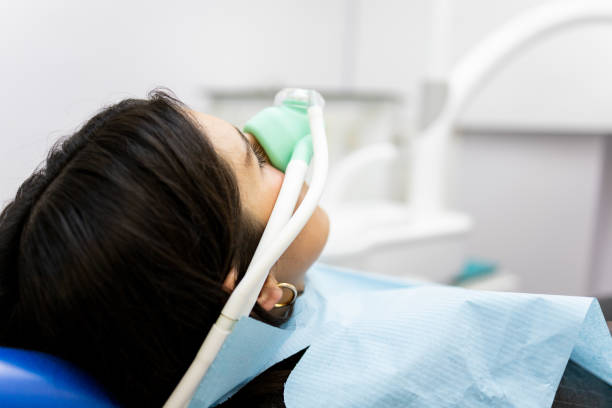
You inhale a controlled mix of nitrous oxide and oxygen through a small comfortable nose mask. Within minutes you feel calm and relaxed. When the mask comes off, the effect wears off quickly, and you can drive yourself home.
Who nitrous oxide (laughing gas) sedation is good for
- Patients with dental anxiety or fear
- Children who need a little help getting through treatment
- Patients with a strong gag reflex
- Longer or more involved procedures (implants, surgery, root canals)
What to expect
- Pre-visit chat. We talk through what to expect and confirm nitrous is right for you.
- Mask & settling in. A soft nose mask delivers the gas; within minutes you feel relaxed.
- Treatment. Your dentist proceeds with the planned treatment while you stay calm and aware.
- Recovery. After we switch you to pure oxygen for a few minutes, the effects wear off and you can leave on your own.
Why we offer it as a default option
Roughly one in three of our patients tells us at some point that they are nervous about the dentist, and many more under-report. Anxiety is the number one reason people delay care and let small problems become large ones. Nitrous removes the barrier without committing you to IV sedation or general anaesthesia. We offer it for routine cleanings, fillings, root canals, extractions, and especially for kids who are getting comfortable with the chair. If you are anxious, tell our receptionist when you book and we will plan the time.
Safety and who should not have nitrous
Nitrous oxide has been studied for over a century. Its safety profile in dental settings is well established. Patients who should not have it: anyone in the first trimester of pregnancy, patients with severe COPD or recent middle-ear surgery, patients on bleomycin chemotherapy, and patients with a vitamin B12 deficiency. We screen for these on your medical history before we use it. If nitrous is contraindicated for you, we use other comfort tools: longer appointments, headphones, topical anaesthetic before the freezing needle, and frequent check-ins.
Nitrous for children, our approach
For children, nitrous is often the difference between a successful first restoration and a long history of avoidance. We start with the lowest effective concentration, talk through what they are feeling, and use it for short appointments only. Most kids tolerate it well and many describe it as a tingly, warm feeling. Parents stay in the room. If a child cannot or will not accept nitrous after a calm introduction, we step back and rebook rather than push. Comfort builds trust and trust pays off across a lifetime of dental visits.
Combining nitrous with local anaesthetic
Nitrous reduces anxiety and softens the gag reflex. It does not numb teeth on its own. For any procedure that needs anaesthesia we still use a local injection, usually with a topical gel first so the needle is barely noticeable. The combination of topical, local anaesthetic, and a low dose of nitrous handles the vast majority of dental procedures comfortably. For longer surgical cases, deeper sedation (oral conscious sedation or IV sedation by a visiting anaesthetist) is occasionally the right choice, and we coordinate that with our surgical referral network.
Coverage and how we walk through fees
Many private dental insurance plans cover nitrous oxide sedation for procedures where sedation is clinically justified, particularly oral surgery and longer treatments. CDCP covers nitrous when needed for specific procedures. We provide direct insurance billing if applicable and confirm coverage before treatment so there are no surprises.
Frequently Asked Questions
Is nitrous oxide safe?
Yes, it's one of the safest sedatives in dentistry, used routinely for both adults and children.
Will I be unconscious?
No. You remain fully awake and responsive, just more relaxed.
Can I drive home after?
Yes. The effects wear off within minutes of removing the mask.
Is it covered by insurance?
Many plans cover nitrous sedation. We can verify before your appointment.