
Restorative Dentistry in Hamilton
Composite (white) fillings, crowns, and bridges that restore strength, function, and appearance.
Restorative dentistry brings damaged teeth back to full health, strength, and natural appearance. We use tooth-coloured composite fillings for cavities, custom crowns to protect weakened teeth, and bridges to replace missing teeth, all with conservative techniques and modern materials.
- Composite (White) Fillings
- Dental Crowns
- Dental Bridges
- Inlays & Onlays
- Implant-Supported Crowns
- Replacing Silver Fillings
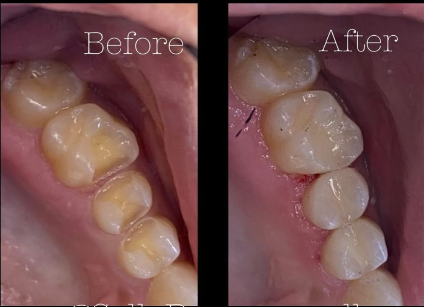
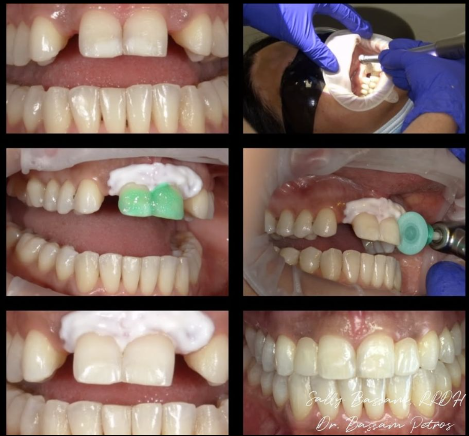
How we restore damaged and missing teeth
Restorative dentistry includes three main treatments at our office. Composite (white) fillings repair cavities and small chips with a tooth-coloured resin that bonds to the tooth and blends with your natural enamel. Crowns are custom caps that fully cover a tooth weakened by decay, a fracture, or a root canal. Bridges use crowns on the teeth next to a gap to support a replacement tooth in between. We also offer inlays and onlays for medium-sized cavities and implant-supported crowns or bridges for missing teeth.
Who restorative dentistry is good for
- Cavities small to large, including replacing old silver amalgam fillings with tooth-coloured composite
- Cracked, chipped, or worn teeth from grinding
- Teeth weakened by large fillings or a root canal (often need a crown)
- Replacing one or more missing teeth with a fixed bridge
- Improving the shape, size, or shade of a single tooth
What to expect
- Diagnosis and X-rays. A clinical exam plus digital X-rays show the extent of decay or damage.
- Conservative plan. We recommend the simplest, most conservative option that will give a durable result: a filling when possible, an inlay/onlay if a filling won't hold, and a crown for larger damage.
- Treatment. Composite fillings finish in one visit. Crowns and bridges typically need two visits with a temporary in between, made from a digital scan (no goopy impressions).
- Bite check and follow-up. We refine your bite, polish the restoration, and review home care before you leave.
Why we use composite (white) fillings exclusively
Silver amalgam fillings have a long track record but they expand and contract with temperature differently than tooth structure, which over time can crack the tooth around the filling. They also require more healthy tooth removal to retain mechanically. Modern composite resins bond chemically to the tooth, conserve more healthy structure, and look like part of the tooth instead of part of a machine. They are our default for every new filling. We routinely replace old amalgam fillings on request, particularly when they are showing signs of failure (margin staining, recurrent decay, fracture lines in the surrounding tooth).
When a filling becomes a crown
A filling that covers more than about a third of the chewing surface of a back tooth starts to compromise the long-term survival of the tooth. The tooth flexes under load, and the more of the original chewing surface that is replaced with restorative material, the more it flexes. Once a filling has covered more than two cusps or wraps from one side of the tooth to the other, a crown (or an inlay or onlay) protects the remaining structure far better than another large filling. We will tell you when a tooth has crossed that line. The flip side is also true: we will not crown a tooth that is fine with a filling.
Crown materials, what we use and why
Zirconia crowns are our default for back teeth. They are strong, well-tolerated, and need very little tooth reduction. For visible front teeth we lean toward layered zirconia or lithium disilicate (IPS e.max) for better aesthetics. Porcelain-fused-to-metal (PFM) crowns, which were the standard for decades, are largely obsolete in our practice except for specific bridge work. The dark metal margin that used to appear at the gum line over time is gone with all-ceramic crowns. Crown design is digital, milled or printed from a scan, and the fit is more precise than what an analog impression could deliver ten years ago.
Bridges or implants for a single missing tooth
A three-unit bridge requires the dentist to prepare the two adjacent teeth as anchors, then cement a connected three-tooth restoration. It is faster (two visits over about two weeks) and usually less involved than an implant. The trade-off is that the two anchor teeth are now linked to the missing-tooth site, and if either of them ever has a problem, the whole bridge has to come off. A single implant leaves the neighbouring teeth completely untouched, and the implant itself is not susceptible to decay. We bias toward implants when the adjacent teeth are healthy and toward bridges when the adjacent teeth already need crowns. Both are valid choices for the right case.
Replacing old fillings, when and why
Fillings do not last forever. Composite fillings average seven to ten years; amalgam fillings often last fifteen to twenty but can crack the tooth around them over time. We replace a filling when the margins are stained or open, when there is recurrent decay under the filling, when the tooth shows a hairline fracture, or when the filling is fractured. We do not replace fillings just because they are old. The first replacement removes more healthy tooth structure than the original placement did, and every subsequent replacement removes more. The honest answer in most cases is: if a 25-year-old amalgam looks fine and the patient has no symptoms, leave it alone.
Insurance and CDCP for restorative work
Composite fillings, crowns, and bridges are all covered to varying degrees by most private dental plans, with an annual maximum that resets each January 1. We provide direct insurance billing if applicable, and we pre-authorize larger treatment plans so the insurer responds in writing before treatment begins. CDCP covers fillings and many basic restorative codes for eligible patients. For larger cases that exceed insurance coverage, splitting treatment over two calendar years (the December-January approach) doubles the annual maximum, and 0% financing covers the remainder.
Frequently Asked Questions
Do you do composite (white) fillings?
Yes. We use tooth-coloured composite for every new filling and routinely replace old silver amalgam fillings on request.
How long do composite fillings last?
With good oral hygiene and regular checkups, composite fillings typically last 7 to 10 years or longer.
How long do crowns and bridges last?
Modern porcelain crowns and bridges typically last 10 to 15 years or longer with proper care.
What is the difference between an inlay, onlay, and crown?
An inlay sits inside the cusps of a tooth, an onlay covers one or more cusps, and a crown covers the entire tooth. We pick the option that preserves the most healthy tooth structure.
Will the restoration match my tooth?
Yes. We shade-match every composite fillings, inlay, onlay, and crown to your natural enamel so the restoration is virtually invisible.
Is restorative dentistry covered by insurance?
Most Canadian plans cover restorative work. CDCP also covers basic restorations for eligible patients. We provide a written estimate before any major treatment.