
Does a root canal hurt?
This is the first thing almost every patient asks, and the honest answer surprises people: a modern root canal feels much like getting a filling. The pain you are afraid of is the pain you already have. That throbbing ache comes from an infected, inflamed nerve inside the tooth, and a root canal is what removes it. With proper freezing, most patients feel pressure and vibration but no sharp pain, and many tell us the relief starts the moment the infected tissue is gone. If you are anxious about the appointment, we also offer nitrous oxide sedation to take the edge off, and our guide to sedation for nervous patients explains exactly how it feels.
What is a root canal, and why do I need one?
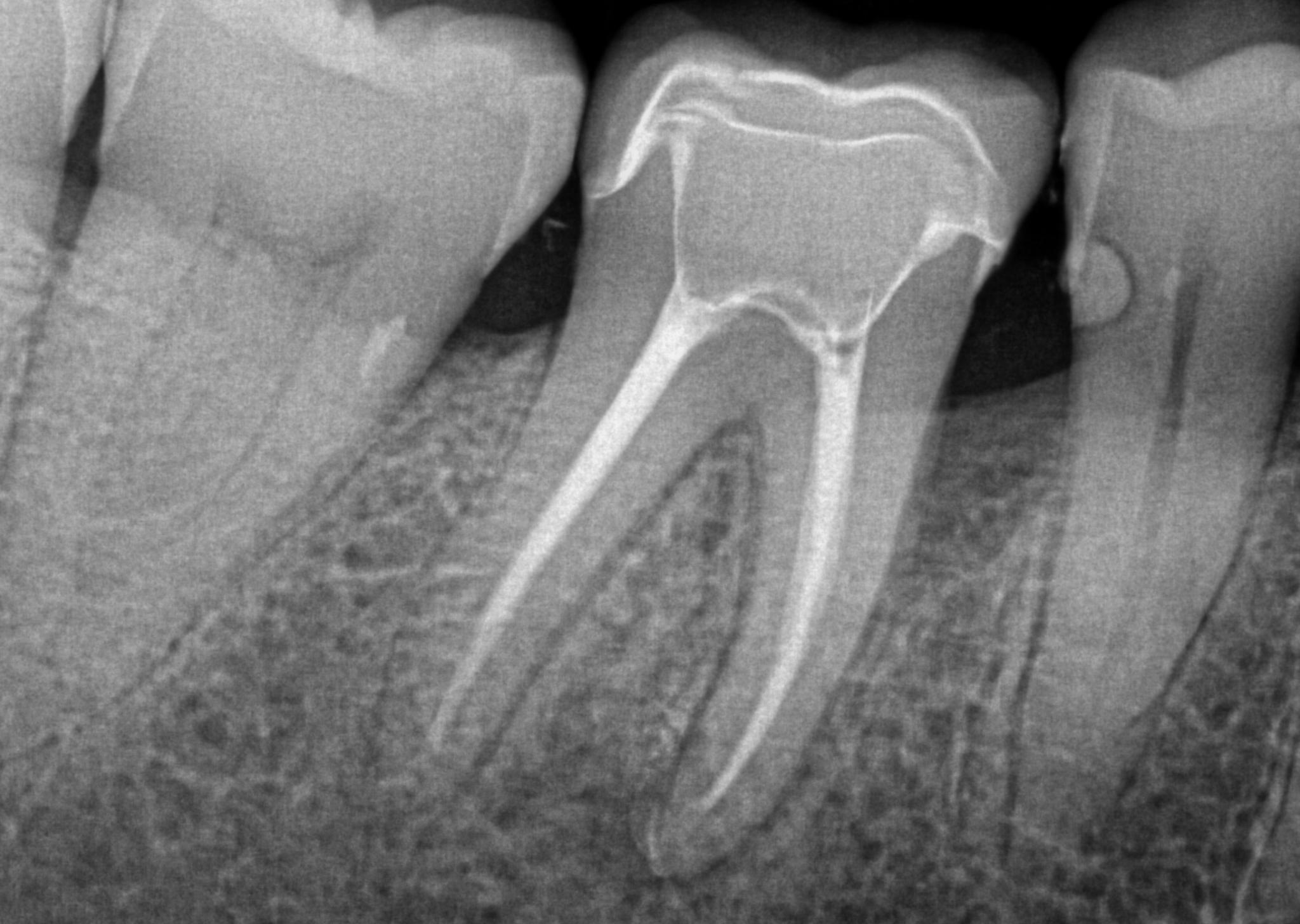
Inside every tooth is a soft core of nerve and blood vessels called the pulp. When a deep cavity, a crack, or an injury lets bacteria reach that pulp, it becomes infected and cannot heal on its own. A root canal cleans the infection out of the canals, disinfects them, and seals them so bacteria cannot return. The tooth stays in your jaw and keeps doing its job. Without treatment, the infection spreads into the bone and forms an abscess, which is how a manageable problem becomes an emergency.
What are the signs you need a root canal?
The classic warning signs are lingering pain to hot or cold that lasts more than a few seconds, a deep throb that wakes you at night, pain when biting down, a pimple-like bump on the gum, swelling in the face or jaw, or a tooth that has darkened. Not every case hurts, though. Some infections are silent and only show up on an X-ray at a routine checkup, which is one more reason regular preventive visits matter so much.
How much does a root canal cost in Hamilton?
Fees at our office follow the Ontario Dental Association fee guide, so costs are fairly consistent between reputable Hamilton clinics. The price depends on how many canals the tooth has: a front tooth has one canal and typically runs about $700 to $1,000, a premolar usually falls around $900 to $1,300, and a molar with three or four canals is generally $1,200 to $1,600. Budget for the crown that usually follows as well. You always get a written estimate before we begin, and our guide to dental costs in Hamilton puts these numbers in context.
What happens during the appointment, step by step
First we freeze the tooth thoroughly and check that you are completely numb before anything starts. We place a small rubber shield to keep the tooth clean and dry, make a tiny opening in the top, and use fine instruments to remove the infected pulp from each canal. The canals are then disinfected, shaped, and filled with a rubber-like material called gutta-percha, and the opening is sealed. Most single-canal teeth are done in about an hour; a molar may take ninety minutes or a second visit.
Why you almost always need a crown afterward
This is the step patients most often skip, and it is the one that decides whether the tooth survives. A tooth that has had a root canal loses its internal blood supply and becomes more brittle, and the access opening weakens it further. A crown caps the tooth and holds it together under chewing forces. Root-canal-treated back teeth that are properly crowned last dramatically longer than those left with only a filling, which tend to fracture, sometimes beyond saving. Skipping the crown to save money usually costs far more later.
Root canal vs extraction: which is better?
Pulling the tooth is faster and cheaper on the day, but it is rarely the better deal. Once a tooth is gone, the neighbouring teeth drift, the opposing tooth over-erupts, and the jawbone in that spot begins to shrink. Replacing it properly with a dental implant typically costs more than the root canal and crown would have, as we break down in our guide to implants in Hamilton. Nothing functions quite like your own tooth, so if it is restorable, we will almost always recommend saving it.
Recovery: what the next few days look like
Expect the tooth to feel tender to bite on for two to four days as the ligament around the root settles down; over-the-counter ibuprofen handles this well for most adults. Chew on the other side until your permanent restoration is placed, especially if you have a temporary filling. Call us if pain worsens after the third day, if swelling appears, or if your bite feels high. Severe pain days later is not normal and is worth a quick look.
Book a root canal consultation in Hamilton
If a tooth is keeping you up at night, do not wait it out, infections do not resolve on their own and the tooth is easier to save early. Call (289) 755-2568 or book online. We accept CDCP, bill insurance directly, and offer 0% financing for qualifying patients.
Have a question about your smile?
Our team is happy to answer questions or set up a consultation. We've served Hamilton families since 2012 and welcome new patients of every age.
Book Appointment (289) 755-2568